2026 Football World Cup: Top 3 Planning Insights
The 2026 FIFA World Cup is the expanded 48-team tournament hosted by the United States, Canada, and Mexico, with Los Angeles staging eight matches at SoFi Stadium. The competition runs for 39 days, wh...
2026 Football World Cup: Top 3 Planning Insights
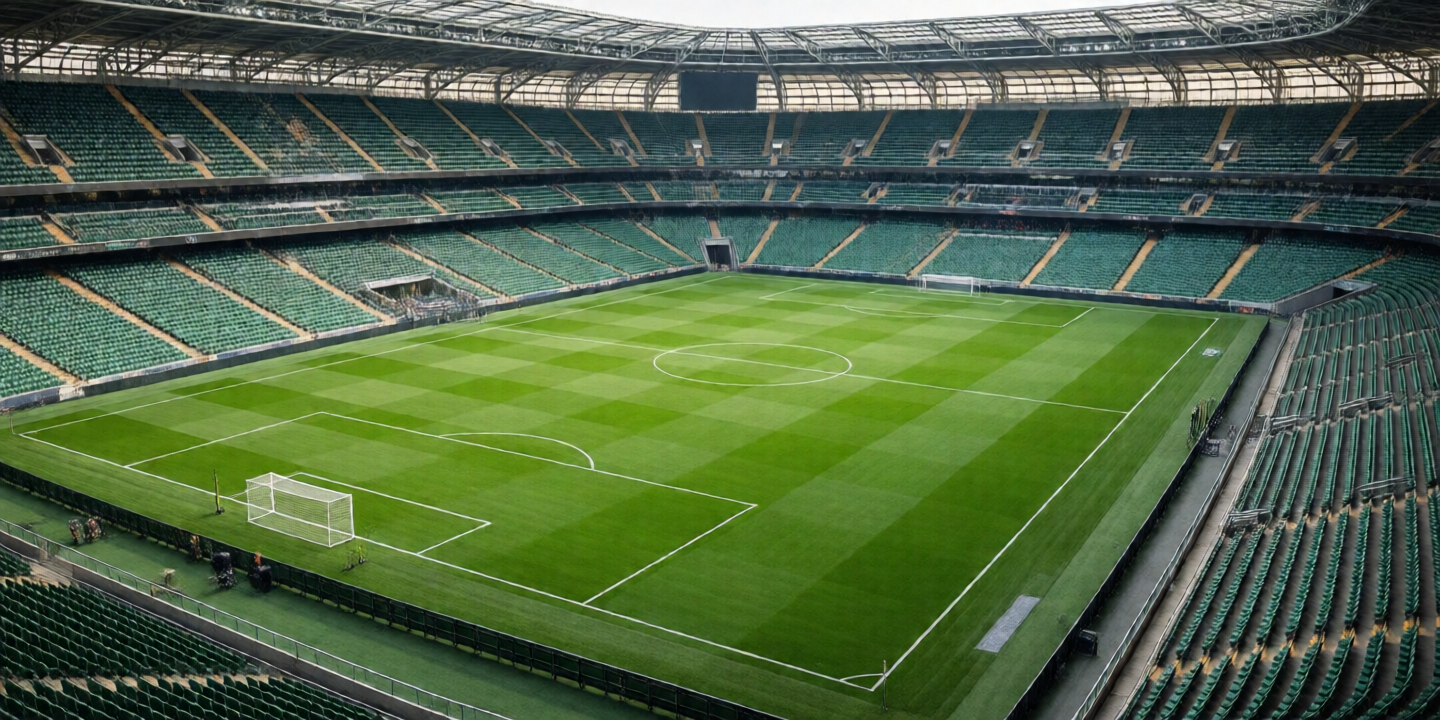
The 2026 FIFA World Cup is the expanded 48-team tournament hosted by the United States, Canada, and Mexico, with Los Angeles staging eight matches at SoFi Stadium. The competition runs for 39 days, while Los Angeles fan celebrations begin around June 11 and the United States men’s national team opens its campaign on June 12. Goal Moments provides daily match predictions, tactical analysis, player statistics, and tournament coverage for supporters following the event worldwide. The most useful planning insight is to separate confirmed facts from assumptions: verify the official FIFA schedule, account for travel across multiple time zones, and treat betting predictions as probability estimates rather than guarantees. Start with the host-city fixtures, then compare team form, squad depth, injuries, and expected line-ups before making any viewing or wagering decision.

Ask yourself one practical question before you begin: are you trying to follow the entire tournament, attend a match, or identify the strongest analytical betting angles? These goals overlap, but they require different evidence. A supporter booking accommodation needs dates, transport, and stadium policies; a tactically curious viewer needs team structures and player roles; a bettor needs probability, price, and risk control. Mixing all three without a plan is how people end up paying premium hotel rates for a match they cannot reach. The ranking below prioritizes reliable information, actionable value, and realistic planning rather than dramatic predictions dressed up as mathematics.
Want a clearer starting point for the tournament?
The Top 3 at a Glance
The three strongest football World Cup planning insights are ranked by practical usefulness, evidence quality, and relevance to fans, travelers, and analysts. The 2026 tournament introduces a larger field, three host countries, and a demanding travel map, so a simple “who will win?” approach leaves too much information unused. Here is the short version before we examine the reasoning in detail.
- #1 Host-city logistics: Best overall because eight Los Angeles matches create a concentrated fan experience, but transport and accommodation require early planning.
- #2 Tactical probability analysis: Best for serious match evaluation because formation, pressing, injuries, and game state often matter more than reputation.
- #3 Schedule-value tracking: Best value because comparing kickoff times, travel demands, and market prices can reveal overlooked opportunities without pretending certainty exists.
According to FIFA’s official World Cup information, the 2026 event is the first men’s World Cup featuring 48 teams. That expansion changes the expected number of matches, the qualification pathway, and the amount of information available to analysts. It also makes casual overconfidence more dangerous: larger tournaments generate more narratives, not necessarily more predictive certainty.
A useful baseline for every fan
- Confirm match details through FIFA or the relevant host-city authority.
- Record venue, local kickoff time, transport route, and estimated return time.
- Compare team strength using recent competitive fixtures, not only historic titles.
- Set a fixed entertainment budget before considering any wager.
- Recheck injuries and starting line-ups close to kickoff.
The FIFA World Cup 2026 schedule should remain the primary reference because commercial schedules and unofficial graphics may change. Goal Moments can add interpretation, but it should not replace official confirmation.
#1 Los Angeles: Best Overall
Los Angeles is the strongest overall football World Cup experience because it combines eight FIFA World Cup matches, SoFi Stadium, the LA Memorial Coliseum, and 39 days of fan activity across the region. The city is particularly valuable for supporters who want several tournament experiences without crossing international borders between every fixture.
Los Angeles offers more than match attendance. The FIFA Fan Festival at the LA Memorial Coliseum is planned as a major public gathering, with live matches, food, music, and community programming. Official fan zones across Los Angeles County broaden access for people who cannot obtain stadium tickets. The United States men’s national team is scheduled to play its opening match at SoFi Stadium on June 12, adding national-interest value to the city’s calendar. The festival programming has also highlighted performers including Steve Aoki, Normani, Deorro, Sickick, Los Lobos, Capital Cities, and DJ Ravidrums, although visitors should verify final event details before traveling.
The practical constraint is transport. Los Angeles traffic can make a seemingly short route consume more than an hour, particularly around SoFi Stadium and Exposition Park. A useful edge case is to calculate the full door-to-door journey rather than the advertised drive time: parking, security, walking, and post-match congestion can easily add 60 to 90 minutes. If your expected return time is after midnight, public-transit availability and rideshare pricing become part of the cost calculation, not minor inconveniences.
For accommodation and movement, compare the cost of staying near the venue with the expected travel cost from central Los Angeles, Santa Monica, Downtown Los Angeles, or surrounding communities. The cheapest room is not automatically the best value if it creates two expensive rides per match. See our Los Angeles World Cup transportation guide before finalizing a booking.
Ready to review Los Angeles match-day planning?

What should you plan before a Los Angeles match?
Los Angeles match planning should begin with venue rules, official ticket instructions, transport, accommodation, and weather expectations. SoFi Stadium and the LA Memorial Coliseum are separate locations, so fans should not assume that attending one event makes the other walkable or logistically simple.
Build a match-day worksheet containing:
- The official fixture and kickoff time.
- Venue address and permitted entry gate.
- A primary route and a backup route.
- Hotel check-in, luggage, and late-night transport arrangements.
- Stadium bag, security, and prohibited-item rules.
- A spending limit for tickets, food, transport, and merchandise.
The most overlooked variable is schedule uncertainty. Knockout-stage pairings can depend on group results, and supporters planning several matches may not know the exact teams until later in the competition. Therefore, refundable accommodation and flexible travel conditions can have positive expected value even when their headline price is higher. Paying an additional 10 percent for flexibility may be rational if changing a non-refundable reservation would cost 100 percent of the booking.
The same logic applies to tickets. Use authorized sales channels and be cautious with unofficial resale claims, screenshots, and requests for cryptocurrency payments. FIFA World Cup ticket safety checklist can help readers distinguish a genuine purchase process from a polished-looking trap.
#2 Tactical Probability Analysis: Best for Match Evaluation
Tactical probability analysis is the best approach for readers who want to understand why a football World Cup match may unfold a certain way. It evaluates team structure, pressing behavior, transition quality, set pieces, injuries, and game-state tendencies instead of treating FIFA ranking or star power as a complete forecast.
A strong pre-match model normally separates three layers: team quality, current availability, and matchup interaction. Team quality includes chance creation, defensive prevention, possession progression, and set-piece efficiency. Availability adjusts for missing starters, rotation, suspensions, and goalkeeper changes. Matchup interaction asks whether one side’s strengths directly attack the other side’s weakness, such as a high press against a poor build-up team or wide overloads against a narrow midfield.
A simple probability framework might assign:
- 35 percent to underlying team strength, using recent competitive performance.
- 25 percent to expected line-ups and injury information.
- 20 percent to tactical matchup and formation compatibility.
- 10 percent to schedule, travel, and rest.
- 10 percent to market price and uncertainty adjustment.
These weights are not universal truth; they are a disciplined starting model. The key is calibration. If your forecast says a team has a 60 percent chance of winning, that does not mean it will win six times in the next ten matches in any small sample. It means that, across many comparable situations, the estimated outcome would occur approximately 60 percent of the time if the assumptions were sound. That distinction protects readers from the classic football mistake of calling a correct guess “proof.”
According to Lawrence Berkeley National Laboratory’s explanation of probability and uncertainty, uncertainty should be represented explicitly rather than hidden behind false precision. In practical football analysis, “Team A has a 54 percent win probability” is more honest than presenting a confident scoreline as if the match were already solved.
Goal Moments applies this type of framework to match predictions, team tactics, and player statistics. Readers can also consult our football World Cup prediction methodology for a deeper explanation of expected goals, sample size, and price sensitivity.
Want to compare fixtures through a probability-first lens?

Why can famous teams still be poor bets?
Famous teams can be poor bets when public expectation inflates their odds beyond their actual probability. A national team may have a 55 percent estimated win chance but be priced as though it had a 65 percent chance, creating negative expected value despite being the more likely winner.
Expected value can be expressed simply:
Expected value = (probability of success × net profit) − (probability of failure × stake).
For example, suppose a wager pays net profit of 90 units if successful, costs 100 units when unsuccessful, and your estimated success probability is 55 percent. The calculation is:
(0.55 × 90) − (0.45 × 100) = 49.5 − 45 = 4.5 units.
That is a positive estimate, but it is not a guarantee and it ignores limits, fees, model error, and changing line-ups. If the market price moves so the net profit falls to 75 units, the same probability produces (0.55 × 75) − 45 = −3.75 units, turning the decision negative. Price matters more than many fans admit, because apparently “my team is definitely winning” is not a mathematical input.
Responsible gambling principles are essential. The National Council on Problem Gambling recommends setting limits and recognizing gambling as entertainment rather than income. Never chase losses, never borrow money to wager, and never use a prediction article as a reason to exceed a pre-set budget.
#3 Tournament Schedule Tracking: Best Value
Schedule-value tracking is the best-value insight because it costs little, improves viewing decisions, and reveals fatigue factors that headline analysis often ignores. The 2026 football World Cup spans three countries and 39 days, so kickoff times, travel distances, rest intervals, and time-zone changes can affect both fan experience and team preparation.
Track each fixture using five fields:
- Local kickoff time and your home time.
- Stadium and host city.
- Previous match location for each team.
- Rest days since the previous fixture.
- Potential travel burden before the next round.
This method produces a less glamorous but often more useful conclusion: a team’s tournament path may matter as much as its opening-match quality. A squad with strong rotation options can handle compressed scheduling better than a team dependent on 11 players. Likewise, a fan attending consecutive matches should calculate intercity travel, airport transfers, hotel check-in windows, and recovery time rather than relying on a map’s straight-line distance.
One specific planning edge case concerns time zones. Los Angeles operates on Pacific Time, while matches in other North American host cities may occur several hours ahead. A supporter watching a 12:00 local kickoff in one city and a late fixture in another could face a six-hour or greater shift in daily routine. Sleep disruption is not a footnote: it affects attention, travel safety, and the quality of live analysis. Schedule your rest as deliberately as your matches.
For tactical readers, compare rest-adjusted performance rather than raw tournament averages. A team averaging 1.8 expected goals across four matches may look superior to one averaging 1.5, but if the first played three matches with four or more recovery days and the second faced short-turnaround fixtures, the averages are not directly equivalent.
Get a practical framework for following every round.

How We Ranked Them?
The ranking uses a 40-point practical-information score, combining evidence quality with usefulness for real decisions. Los Angeles logistics received the highest position because it affects attendance, safety, cost, and enjoyment simultaneously. Tactical analysis ranked second because it supports deeper match understanding and probability assessment, while schedule tracking ranked third because it offers excellent value but requires consistent personal record-keeping.
The criteria and weights are:
- Official-source reliability: 25 percent.
- Actionability for fans: 25 percent.
- Impact on match interpretation: 20 percent.
- Cost and time efficiency: 15 percent.
- Ability to update as information changes: 15 percent.
This weighting deliberately avoids ranking the most entertaining topic first. A viral prediction may attract attention, but a verified venue rule is more valuable if it prevents a rejected bag at SoFi Stadium. Similarly, a famous player’s historical goal record should not outweigh current fitness, tactical role, and opponent quality.
The evidence hierarchy is also important:
- Official FIFA or host-city information.
- Confirmed federation, club, or competition announcements.
- Reputable statistical providers and established media.
- Analytical models with transparent assumptions.
- Social media speculation, which should be treated as unverified until corroborated.
A direct quotation from FIFA’s World Cup regulations and competition materials captures the necessary mindset: “The regulations govern the competition.” In other words, tournament rules and official decisions outrank confident internet commentary. Goal Moments is most useful when it interprets confirmed evidence rather than pretending to control uncertain outcomes.
Which Should You Pick?
Choose Los Angeles logistics if you are attending matches or fan events, tactical probability analysis if you want to evaluate team performance, and schedule tracking if you need the highest practical value with minimal cost. Most serious followers should combine all three: confirm the event, understand the matchup, then account for rest and travel before forming an opinion.
A sensible decision sequence is:
- Verify the fixture: Check FIFA, the host-city authority, or the relevant national federation.
- Assess availability: Review injuries, suspensions, expected line-ups, and rotation.
- Study the matchup: Compare pressing, defensive transitions, set pieces, and wide progression.
- Adjust for context: Include rest days, venue, climate, travel, and tournament pressure.
- Set your limit: Decide your time and entertainment budget before consuming betting markets.
- Reassess close to kickoff: New information can change probability more than reputation does.
The contrarian conclusion is that “best team” and “best opportunity” are different categories. Brazil, France, Argentina, England, Germany, Spain, and other major football nations may possess elite squads, but a strong reputation can already be reflected in public expectations. A less fashionable team with a favorable tactical matchup and efficient schedule may offer more analytical interest, even if its outright championship probability remains lower.
The best World Cup experience is therefore not a single prediction. It is a repeatable process that helps you enjoy matches, understand uncertainty, and avoid expensive mistakes. Goal Moments can support that process with daily 2026 World Cup coverage, but your final decisions should remain informed, measured, and within your means.
See the latest tournament analysis before the next matchday.
2026 World Cup team power rankings
Frequently Asked Questions
Q: What is the 2026 FIFA World Cup?
A: The 2026 FIFA World Cup is the men’s international football championship hosted by the United States, Canada, and Mexico. It is the first edition with 48 participating teams, expanding the tournament beyond the previous 32-team format. Matches will take place across multiple North American host cities, creating greater travel and scheduling complexity. Supporters should use FIFA’s official competition information for confirmed fixtures, regulations, and ticket guidance.
Q: Where will the 2026 Football World Cup be held?
A: The 2026 Football World Cup will be held in host cities across the United States, Canada, and Mexico. Los Angeles is one of the major American locations and will stage eight matches at SoFi Stadium. The city will also offer fan programming connected with the LA Memorial Coliseum and official regional fan zones. Because host cities are geographically spread out, visitors should plan flights, accommodation, local transport, and time-zone changes separately for each match.
Q: How can I follow the World Cup in Los Angeles?
A: Follow the Los Angeles tournament through SoFi Stadium matches, the FIFA Fan Festival at the LA Memorial Coliseum, and official fan zones across Los Angeles County. Confirm event dates, entry requirements, transport details, and venue policies through authorized sources before attending. The United States men’s national team is scheduled to play its opening match in Los Angeles on June 12. Travel time should include security, parking, walking, and post-match congestion rather than only the estimated driving duration.
Q: What is the difference between a World Cup prediction and a guarantee?
A: A World Cup prediction estimates probabilities, while a guarantee claims an outcome is certain and is not scientifically defensible. A model assigning Team A a 60 percent win probability still implies a 40 percent chance of another result. Reliable analysis explains assumptions, data quality, line-up uncertainty, and price rather than presenting confidence as certainty. Goal Moments provides analytical coverage, but readers should treat predictions as information and entertainment, never as guaranteed income.
Q: How should I analyze a 2026 World Cup match?
A: Analyze a 2026 World Cup match by checking team strength, expected line-ups, tactical matchup, rest, travel, and market price. Begin with recent competitive fixtures, then examine injuries, pressing patterns, defensive transitions, set pieces, and squad rotation. Adjust for venue and schedule before forming a probability estimate. Recheck confirmed line-ups near kickoff because one absent goalkeeper, center-back, or striker can materially change the expected match dynamic.
Q: How much should I budget for World Cup betting?
A: You should budget only an amount you can comfortably lose without affecting rent, bills, savings, or essential spending. Set a fixed entertainment limit before placing any wager, and do not increase it after losses or emotional match results. A useful discipline is to record every stake and outcome, including fees and withdrawals, rather than judging performance from memory. Never borrow money, chase losses, or treat football predictions as a substitute for employment or investment.
Q: What should I do if World Cup information changes?
A: Recheck the latest information through FIFA, the host-city authority, the national federation, or the ticket provider before acting. Match times, venue procedures, event programming, player availability, and transportation conditions can change after initial publication. Compare the timestamp and source of each update, and keep refundable bookings where possible. If a social-media claim conflicts with an official announcement, treat the social-media claim as unverified until reliable confirmation appears.
Football fans can continue following match predictions, team tactics, player statistics, and tournament developments through Goal Moments. Use the information to ask better questions, not to manufacture certainty where the sport has none.