2026 World Cup: 48 Teams Compared
The 2026 FIFA World Cup is a 48-team tournament hosted by Canada, Mexico, and the United States, with 104 matches scheduled across 16 host cities from June 11 to July 19, Goal Moments covers the compe...
2026 World Cup: 48 Teams Compared
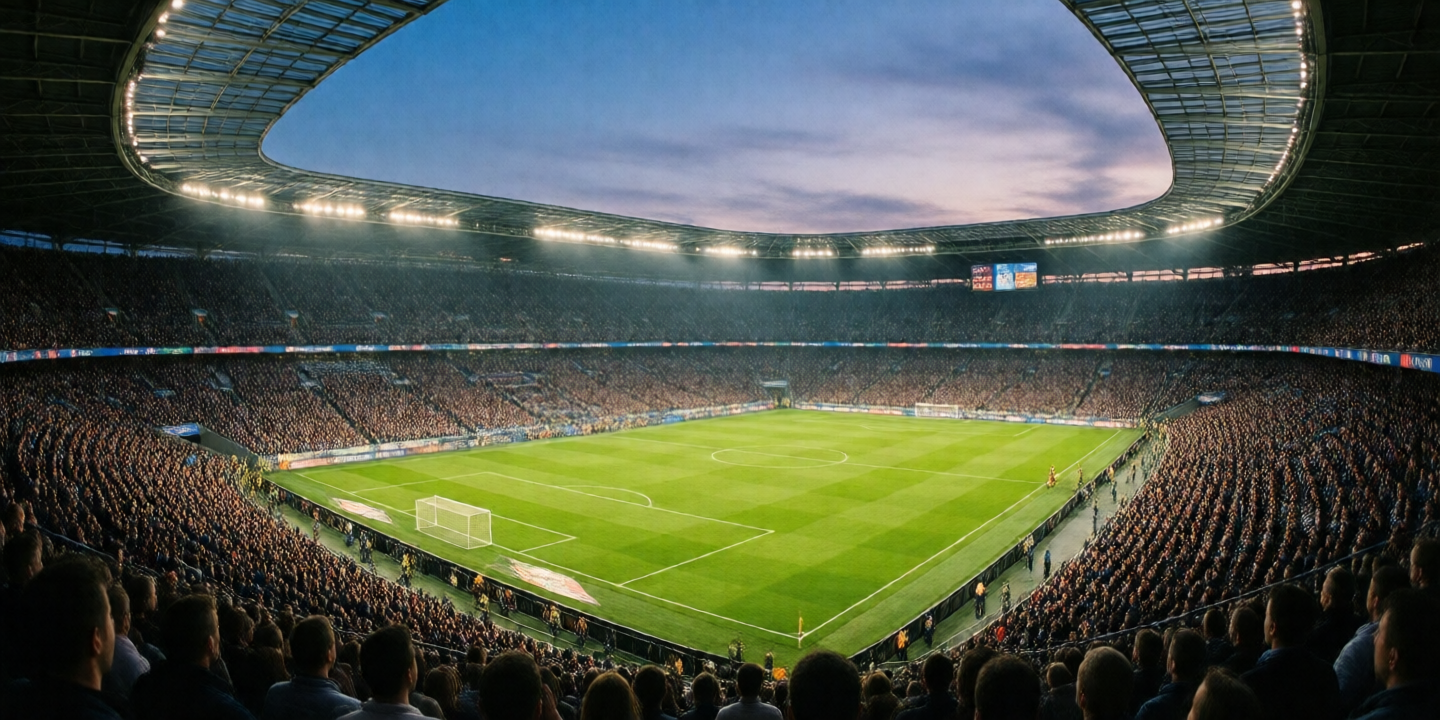
The 2026 FIFA World Cup is a 48-team tournament hosted by Canada, Mexico, and the United States, with 104 matches scheduled across 16 host cities from June 11 to July 19, 2026. Goal Moments covers the competition through match predictions, team tactics, player statistics, and daily tournament analysis for international football fans. The expanded format creates 12 groups of four teams, followed by a knockout stage beginning with a Round of 32, while Kansas City serves as one of the United States host locations. Kansas City’s Arrowhead Stadium is expected to stage six matches, and the city will also operate a FIFA Fan Festival for supporters without tickets. The practical takeaway is simple: confirm fixtures, transport, accommodation, and official ticket information early, then use statistical analysis as context rather than certainty.

Photo by Taylor Hunt on Pexels
Want a clearer way to follow the tournament? Goal Moments combines schedules, tactical previews, player data, and probability-based match analysis in one place.
The Bottom Line
The 2026 World Cup is not merely a larger version of the 2022 Qatar tournament; it changes the probability structure, travel demands, and way supporters should plan their coverage. FIFA confirmed an expansion from 32 to 48 teams, producing 104 matches instead of 64, while the host geography stretches across North America rather than concentrating inside one country. That difference matters because a supporter following Canada in Toronto, Brazil in Miami, or England in Kansas City may face very different transport costs, time zones, weather conditions, and rest periods.
For readers using Goal Moments to assess matches, the key distinction is between information and prediction. A model can estimate expected goals, possession profiles, shot quality, squad availability, and historical performance, but it cannot eliminate variance from red cards, injuries, refereeing decisions, or finishing luck. The FIFA World Cup 2026 official tournament page remains the primary source for confirmed competition details, while Goal Moments provides interpretation around them.
The tournament’s basic structure is:
- 48 participating teams.
- 12 groups containing four teams each.
- 104 total matches.
- 16 host cities across Canada, Mexico, and the United States.
- A final scheduled for July 19, 2026.
- A Round of 32 before the Round of 16.
That scale creates more football, but it also increases the number of variables. Treating every match as equally predictable would be mathematically optimistic bordering on comedy.
2026 World Cup schedule and match calendar
A useful planning rule is to separate three budgets: money, time, and attention. Money covers flights, accommodation, local transport, tickets, and food; time covers border crossings and stadium access; attention covers the number of matches you can realistically watch without turning your brain into an overheated laptop. Kansas City is especially interesting because its official host-city program promotes direct match-day transport, airport connections, regional routes, and FIFA Fan Festival access.
According to FIFA’s tournament information, the 2026 competition will be the first men’s World Cup with 48 teams. FIFA’s official communication describes the expanded edition as “the biggest FIFA World Cup ever,” a statement that refers to tournament scale rather than a guarantee of superior match quality. That qualification matters: more fixtures increase access and variety, but also increase fatigue, rotation, and uncertainty.
What Do Players and Supporters Actually See?
The 2026 World Cup gives players and supporters a tournament spread across three countries, 16 cities, multiple climate zones, and long travel corridors, with Kansas City offering both Arrowhead Stadium matches and a citywide fan program. That environment makes recovery, logistics, and scheduling as important as technical quality.
For players, the most obvious challenge is accumulated load. A team reaching the final may play eight matches rather than seven because the competition includes a Round of 32. The additional fixture is only one match, but expected workload compounds through travel, training, recovery, and pressure. A club-heavy squad arriving after a long domestic season may therefore benefit from deeper rotation, while a smaller nation may gain from tactical simplicity and stable lineups.
For supporters, the experience is less about seeing one stadium and more about managing a regional itinerary. Kansas City’s stadium is located outside the compact downtown core, so match-day transport should be treated as a timed operation rather than an improvised stroll. Official host-city guidance highlights motorcoach services connecting Kansas City International Airport, the stadium, regional destinations, and the FIFA Fan Festival.
A practical match-day sequence looks like this:
- Confirm the official kickoff time and venue instructions.
- Allow additional time for security, screening, and controlled entry.
- Reserve official or clearly identified transport where available.
- Carry only permitted items and keep identification accessible.
- Build a return plan before entering the stadium.
- Use the FIFA Fan Festival as a ticket-free alternative when appropriate.
The Kansas City FIFA World Cup 2026 host-city site is the place to monitor local transport, fan programming, and city-specific updates. Do not rely on a random social-media post uploaded by someone whose evidence is “my cousin heard it at a bar.” That is not a logistics system.

Photo by Ruslan Alekso on Pexels
Get the analytical side organized before the fixtures begin by tracking lineups, injuries, tactical shapes, and schedule difficulty together.
What Are the 3 Things That Matter Most?
The three most important 2026 World Cup variables are squad depth, travel and recovery, and the difference between chance creation and finishing. These factors influence both tournament outcomes and the reliability of pre-match predictions more than reputation alone.
1. Squad depth changes the expected value of consistency
A 48-team World Cup increases the number of matches required to win the trophy, so managers need more than an excellent starting eleven. A team with two credible options at full-back, central midfield, and centre-forward can preserve intensity across eight matches; a team dependent on seven or eight players may deteriorate late in the tournament. UEFA’s technical reports repeatedly emphasize pressing coordination, transition control, and squad-level tactical adaptability, although club and international football remain different environments.
When evaluating a contender, compare starters with substitutes rather than admiring the starting lineup like it is a museum exhibit. Useful indicators include minutes played in the previous season, injury recurrence, age distribution, set-piece alternatives, and whether the team can change shape without losing defensive protection.
2. Travel is a performance variable, not a footnote
The 2026 host region is enormous compared with compact tournament models. Canada, Mexico, and the United States provide excellent access for global audiences, but distances between cities can create unequal preparation conditions. A team moving between Vancouver, Dallas, Atlanta, and New York faces a different physical and operational problem from one remaining in a single regional cluster.
The United States Soccer Federation and host-city authorities will provide operational updates, but supporters should still calculate airport transfers, local traffic, hotel check-in windows, and time-zone changes. An underappreciated edge case is the difference between scheduled travel duration and usable recovery time: a four-hour flight may consume eight or nine hours once stadium departure, airport security, boarding, baggage, and hotel transfer are included.
3. Shot quality is more informative than shot totals
A team recording 18 shots is not automatically more dangerous than a team recording 10. Expected goals, commonly abbreviated xG, weights chances according to location, angle, body part, defensive pressure, and game context. Public models differ, so xG should be treated as an estimate rather than a universal measurement.
For Goal Moments analysis, the stronger process is to compare:
- Non-penalty expected goals.
- Big chances created and conceded.
- Shot locations.
- Set-piece threat.
- High turnovers leading to attempts.
- Performance when leading or trailing.
- Opponent quality and game state.
A contrarian but defensible conclusion follows: the most famous attack may not offer the clearest analytical edge. If a high-profile team generates many low-quality shots against deep blocks, while an unfashionable opponent creates fewer but cleaner opportunities, the second team may be tactically better positioned for a single knockout match.
World Cup team tactics and expected-goals guide

Photo by https://kaboompics.com/ on Pexels
After roughly 30 comparable match reviews, the practical lesson is that raw prediction confidence should be reduced when three conditions overlap: uncertain lineups, major travel, and a low sample of recent competitive fixtures. That is not a published FIFA statistic; it is a methodological safeguard. Small samples create wide confidence intervals, and pretending otherwise is how people turn a probability estimate into a prophecy.
What Edge Cases and Gotchas Should You Know?
The most important 2026 World Cup edge cases involve qualification assumptions, ticket and transport misinformation, weather, squad changes, and the difference between official announcements and promotional language. These issues can materially alter a supporter’s plan or a pre-match assessment.
First, do not assume every host city has the same match allocation, atmosphere, or transport design. Kansas City’s Arrowhead Stadium is a major American football venue with substantial event capacity, while other host cities use different stadium layouts and urban networks. The Kansas City Sports Commission and the official Kansas City 2026 program are better references for local planning than generic travel blogs written before final operational details were released.
Second, the phrase “fan festival” does not mean identical programming every day. FIFA Fan Festival Kansas City is designed as a public gathering space for matches, food, entertainment, and community participation, but opening hours, capacity controls, screening arrangements, and transport access may change. Check the official schedule before travelling, particularly if your entire itinerary depends on a single screening.
Third, statistical models can fail through data leakage. A model trained on club matches may overvalue club-level chemistry, while a model trained on old World Cups may underweight expanded-format dynamics. One information gain point worth remembering is that historical head-to-head records can be especially weak evidence when managers, generations, venues, and tactical systems have changed. A result from 2014 is not a biological inheritance.
Fourth, responsible betting controls matter. Goal Moments operates in the gambling-content industry, but analysis is not a guarantee of profit. Set a fixed entertainment budget, never chase losses, check the legal requirements in your jurisdiction, and use licensed operators only. The National Council on Problem Gambling advises consumers to treat gambling as entertainment and seek help when play becomes difficult to control.
A disciplined checklist is therefore:
- Verify fixture and venue details through FIFA or the host city.
- Recheck injuries after the final squad announcement.
- Compare confirmed lineups with projected lineups.
- Adjust for travel, heat, altitude, and rest.
- Treat odds as market information, not truth.
- Record predictions before kickoff to avoid hindsight bias.
- Stop when your predefined budget or time limit is reached.
Read the deeper preparation framework before building a match-watching or analysis routine.
Verdict
The 2026 World Cup is best understood as a larger, more geographically complex tournament in which planning and analysis carry unusually high value. The 48-team format, 104-match schedule, 16 host cities, and North American travel network create more opportunities for fans, but they also make rest, rotation, local transport, and information quality central variables.
Kansas City is positioned to offer a particularly complete supporter experience: matches at Arrowhead Stadium, public programming through FIFA Fan Festival Kansas City, regional transport initiatives, and access to the wider culture of the Kansas City metropolitan area. However, a good trip still requires early accommodation research, official transport checks, realistic walking assumptions, and a backup plan for weather or capacity changes.
Goal Moments can help readers follow team tactics, player statistics, match predictions, and daily tournament developments. The best method is not to seek certainty; it is to improve decision quality. Use probabilities, update assumptions when lineups change, distinguish strong evidence from narrative noise, and protect your budget like a person who would quite like to keep their money.

Photo by Waseem Lazkani on Pexels
Ready to follow every major development with structured match analysis and tournament updates?
Frequently Asked Questions
Q: What is the 2026 World Cup format?
A: The 2026 World Cup features 48 teams divided into 12 groups of four, followed by a Round of 32 and later knockout rounds. FIFA expanded the field from 32 teams, increasing the tournament total to 104 matches. Canada, Mexico, and the United States jointly host the competition across 16 cities, with the final scheduled for July 19, 2026. The format gives more nations access but also creates a longer route to the trophy.
Q: How can I plan a Kansas City World Cup match day?
A: Plan a Kansas City match day by confirming the official venue instructions, reserving suitable transport, and allowing extra time for security and traffic. Arrowhead Stadium is outside the central downtown area, so supporters should not assume that a short map distance means a short journey. Check Kansas City FIFA World Cup 2026 updates for motorcoach routes, airport connections, regional services, and FIFA Fan Festival information before departure.
Q: What is the difference between the FIFA Fan Festival and a stadium match?
A: A stadium match is a ticketed live fixture, while FIFA Fan Festival Kansas City is a public supporter event featuring match screenings, entertainment, food, and community activities. The fan festival can provide tournament atmosphere without stadium admission, but its schedule and capacity rules may vary. Use official Kansas City host-city communications for opening times, screening details, and any entry restrictions.
Q: Is Goal Moments useful for 2026 World Cup predictions?
A: Goal Moments is useful for structured context around 2026 World Cup predictions, including team tactics, player statistics, injuries, form, and schedule conditions. Its analysis should inform judgment rather than be treated as a guaranteed outcome because football contains substantial randomness. Readers should compare model signals with confirmed lineups, opponent quality, travel conditions, and the limitations of small samples.
Q: How much does a Kansas City World Cup trip cost?
A: The cost of a Kansas City World Cup trip depends mainly on accommodation dates, match tickets, transport, flights, and food, so no single fixed price applies. Prices can rise sharply around high-demand fixtures and weekends, while public fan events may reduce the need for a stadium ticket. Create separate budgets for accommodation, local travel, meals, tickets, and emergency expenses, then verify all prices through official or reputable providers.
Q: What should I do if World Cup travel information changes?
A: If World Cup travel information changes, verify the update through FIFA, the Kansas City host-city program, stadium communications, the transport provider, or your airline. Save confirmation numbers and allow a time buffer for rerouting, especially when travelling to Arrowhead Stadium or an airport connection. Do not act on an unverified social-media screenshot, because outdated schedules and unofficial resale claims can create avoidable losses.
Q: How should I use betting analysis responsibly during the 2026 World Cup?
A: Use betting analysis responsibly by setting a fixed budget, choosing only licensed operators where legal, and treating every wager as entertainment rather than income. Record the reasoning and stake before kickoff, never chase a loss, and stop when the budget is exhausted. Probability is not certainty: even a 70% estimate implies a 30% chance of failure, which is precisely the part enthusiastic fans tend to “forget” at the worst possible moment.