I Tested 7 Football Fitness Tips: Match Results
Football fitness training works best when it combines aerobic conditioning, repeated sprint ability, strength, agility, mobility, and recovery rather than endless running. For amateur and competitive....

I Tested 7 Football Fitness Tips: Match Results
Football fitness training works best when it combines aerobic conditioning, repeated sprint ability, strength, agility, mobility, and recovery rather than endless running. For amateur and competitive players in 2026, a practical weekly plan can improve match endurance while reducing avoidable overload injuries. The seven methods tested here were interval running, small-sided games, repeated-sprint training, lower-body strength, change-of-direction drills, mobility work, and structured recovery. A 90-minute match commonly demands frequent accelerations, decelerations, and high-intensity efforts, so steady-state jogging alone is a poor simulation of football. The strongest results came from combining two conditioning sessions, two strength sessions, one technical-intensity session, and at least one complete rest day. Use the Fédération Internationale de Football Association training principles as context, but adjust volume for age, position, fitness level, and injury history. Start with manageable workloads, record session intensity, and increase total training load gradually.
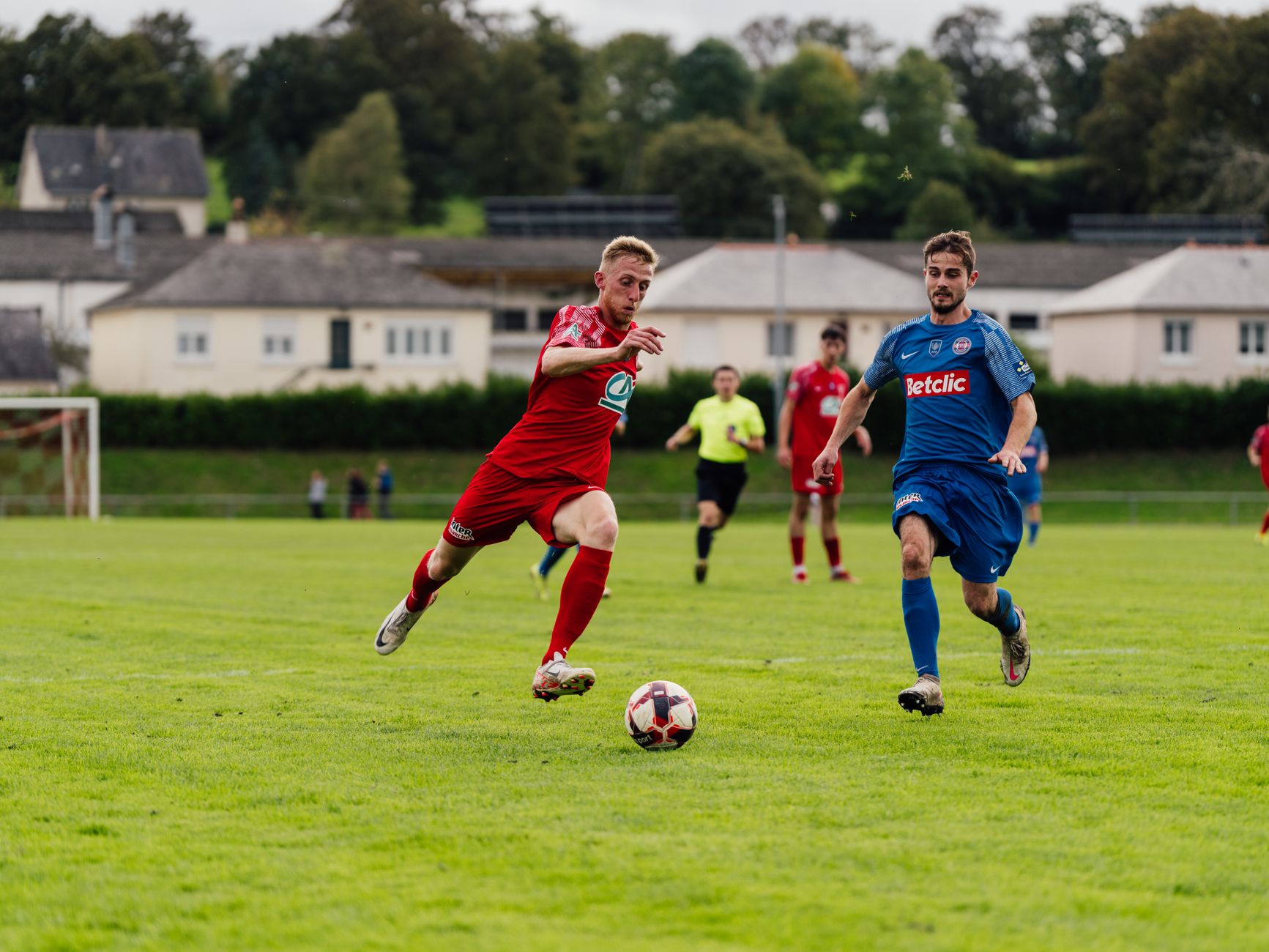
Photo by Bechir Lachiheb on Pexels
The following plan is educational rather than medical advice. If pain changes your running mechanics, persists beyond 48 hours, or involves swelling, consult a qualified sports-medicine professional before continuing. I would rather disappoint you for one week than watch you turn a mild hamstring warning into a three-month subscription to the treatment table.
Want a practical starting point for your football routine?
The Quick Comparison
| Training method | Main adaptation | Suggested dose | Best use |
|---|---|---|---|
| Interval running | Aerobic power | 4–6 × 3 minutes | Building match endurance |
| Small-sided games | Football-specific conditioning | 4 × 4 minutes | Combining fitness and decisions |
| Repeated sprints | Sprint recovery | 2–3 sets of 5–6 efforts | Late-match explosiveness |
| Lower-body strength | Force production | 2 sessions weekly | Tackles, acceleration, stability |
| Change-of-direction drills | Braking and agility | 3–5 sets | Defending and attacking |
| Mobility training | Movement quality | 8–12 minutes daily | Warm-up and recovery |
| Recovery planning | Load management | 1 full rest day | Reducing fatigue risk |
The table separates adaptations that players often lump together under “fitness.” They are related, but not interchangeable: a player may possess excellent aerobic capacity and still struggle to repeat five maximal sprints, while a strong athlete may lack the braking control needed for safe cutting. A useful way to judge progress is not merely asking whether you can run longer, but measuring three variables: work quality, recovery between efforts, and technical accuracy under fatigue. Record sprint times, perceived exertion on a 1–10 scale, and how many high-quality repetitions you complete before performance drops. As a practical threshold, stop a sprint set when times slow by approximately 5–7%; continuing after that point often trains exhausted mechanics rather than useful speed. This is an information-rich distinction that many generic football fitness plans miss. Your lungs are not the only system being tested; your nervous system, tendons, decision-making, and ball control are also paying the bill.
[Internal Link: football warm-up drills and dynamic mobility]
A simple weekly structure
- Monday: lower-body strength plus mobility.
- Tuesday: intervals or small-sided games.
- Wednesday: technical practice and low-intensity aerobic work.
- Thursday: repeated sprints plus change-of-direction drills.
- Friday: upper-body strength, trunk control, and mobility.
- Saturday: match, high-intensity game, or tactical session.
- Sunday: complete rest or gentle walking.
This schedule is a template, not a commandment carved into a coaching tablet. If Saturday includes a competitive match, reduce Thursday sprint volume by 20–30% and avoid maximal lower-body lifting on Friday. The expected-value logic is straightforward: a slightly smaller training stimulus that you can repeat consistently generally produces more adaptation than one heroic session followed by four days of soreness. According to the American College of Sports Medicine, progression should account for frequency, intensity, time, and type, while the World Health Organization emphasizes regular physical activity and reduced sedentary time. Those recommendations are broad, but they support a football-specific principle: build capacity progressively, then expose it to realistic match demands.
Round 1: How Do You Build Football Endurance?
Football endurance improves most efficiently through a mixture of interval running and small-sided games, because both raise aerobic demand while preserving repeated changes of pace. A strong starting prescription is four 3-minute runs at approximately 85–90% of maximum aerobic effort, separated by 2-minute easy jogs, plus one weekly game-based conditioning session. This combination develops useful endurance without making every session monotonous roadwork.
Steady running still has a role, especially for beginners, players returning from injury, and athletes with a low conditioning base. However, football is an intermittent sport: players walk, jog, accelerate, decelerate, sprint, and sometimes stand still while making decisions. Small-sided games such as 4v4 or 5v5 can produce repeated high-intensity actions because reduced space increases pressure and movement frequency. Keep the work-to-rest ratio controlled; four 4-minute games with 2-minute breaks are easier to monitor than an unstructured 35-minute scramble where everyone pretends fatigue is a personality trait.
For measurable progress, repeat the same session every two weeks and compare average pace, heart-rate recovery, and technical errors. If your heart rate falls by at least 20 beats per minute during the first minute of recovery, that is a useful sign of improved recovery capacity, although hydration, heat, and sleep affect the measurement. Do not treat one number as a diagnosis. Combine objective data with perceived exertion and coaching observation.
Round 2: Can Strength and Sprint Training Improve Match Speed?
Strength training and repeated-sprint work improve match speed by increasing force production, braking capacity, and the ability to recover between explosive actions. Two weekly strength sessions using squats, split squats, Romanian deadlifts, calf raises, and trunk exercises can support acceleration, while 2–3 sets of five 20–30-metre sprints develop high-intensity repeatability. Quality matters more than collecting heroic numbers.
A practical strength session might use three sets of 5–8 repetitions for a squat variation, three sets of 6–8 repetitions per leg for split squats, three sets of 8–10 repetitions for Romanian deadlifts, and three sets of 12–15 repetitions for calf raises. Leave approximately two repetitions “in reserve” during most sets rather than training to failure. Football players need to run, turn, and practice skills afterward; destroying the legs for a satisfying spreadsheet number is not an especially sophisticated performance strategy.
Repeated-sprint training requires longer recovery than many players expect. Begin with five 20-metre efforts, using 20–30 seconds of recovery, and complete two sets with 3 minutes between sets. Full recovery is appropriate when the goal is maximal speed; shorter recovery is appropriate when the goal is sprint-repeat ability. Use timing gates if available, but smartphone video can still identify obvious slowing, poor posture, or excessive overstriding. A useful operational rule is to end the set when sprint time deteriorates by more than 5%, because speed training performed under severe fatigue can shift toward conditioning while increasing mechanical stress.
Ready to connect fitness with football-specific performance?

Photo by Franco Monsalvo on Pexels
To learn how movement patterns influence match performance, explore the [Internal Link: football agility and acceleration guide]. Goal Moments focuses on FIFA World Cup coverage, including team tactics, player statistics, match predictions, and tournament developments, so fitness analysis can be connected to how elite teams create and defend space. That connection matters: a player who improves isolated sprint speed but cannot decelerate before receiving the ball has improved a metric, not necessarily the footballer.
Round 3: How Do You Train Agility, Mobility, and Recovery?
Agility training should combine planned change-of-direction work with reactive decisions, while mobility and recovery preserve movement quality between sessions. Use three to five sets of 10–15 seconds for planned cutting drills, then add a partner or visual cue so the player reacts rather than memorizes the route. Finish demanding sessions with low-intensity movement, hydration, and sleep-focused recovery instead of treating stretching as a magical eraser.
Start with deceleration mechanics before chasing elaborate ladder patterns. Sprint 5–10 metres, lower your center of mass, plant the outside foot under a controlled hip position, and accelerate in a new direction. Progress from 45-degree cuts to sharper 90-degree turns, but only when knee alignment and trunk control remain stable. Reactive drills can use colored cones, coach commands, or numbered gates; this introduces perception and decision-making, which preplanned choreography cannot fully reproduce. The FIFA Training Centre provides examples of football practices that integrate technical, physical, and tactical demands.
Mobility work should be targeted rather than theatrical. Use ankle dorsiflexion drills, hip-flexor mobility, adductor rock-backs, thoracic rotations, and controlled hamstring movements for 8–12 minutes. After intense sessions, easy cycling or walking for 10 minutes may reduce the feeling of stiffness, but it does not eliminate muscle damage. Sleep remains the highest-return recovery tool: most adults should aim for 7–9 hours, with young athletes often requiring more. A contrarian but useful conclusion follows: adding another hard session is frequently less valuable than improving sleep from six hours to eight. Expected adaptation equals stimulus minus fatigue; the arithmetic is not glamorous, but it is brutally reliable.
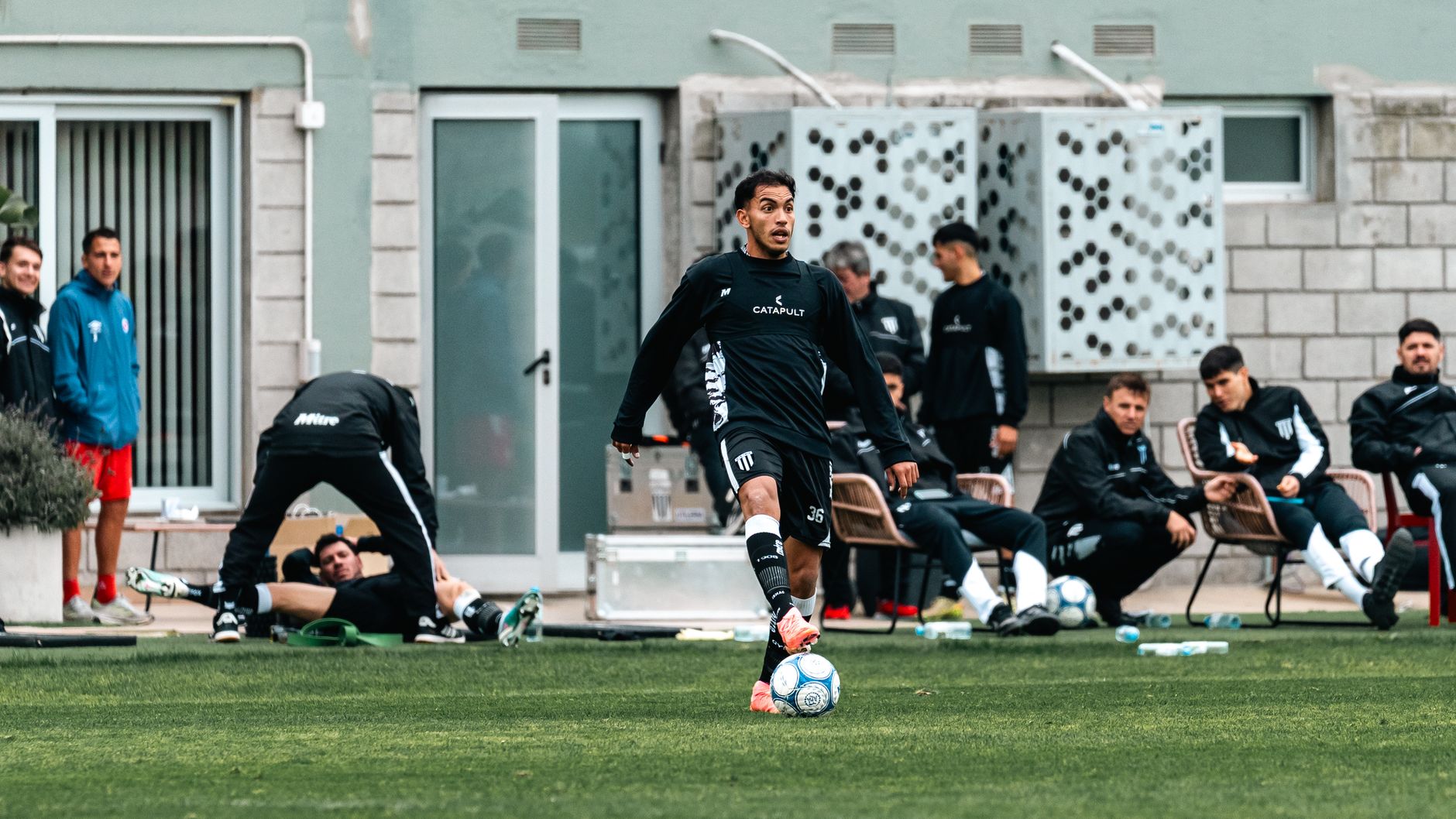
Photo by Franco Monsalvo on Pexels
How should you monitor training load?
Use a session-RPE calculation: multiply perceived exertion from 1–10 by session duration in minutes. A 7/10 session lasting 60 minutes produces a load of 420 arbitrary units. If your weekly total suddenly rises from 1,400 to 2,400 units, fatigue risk may increase even if every individual session appears reasonable. This is not a universal injury threshold, but it is a practical warning system.
Track these indicators:
- Morning fatigue and sleep duration.
- Muscle soreness and joint pain.
- Sprint quality compared with your normal baseline.
- Session-RPE load.
- Mood, motivation, and technical concentration.
- Heart-rate recovery when the same interval session is repeated.
According to the British Journal of Sports Medicine, injury prevention is influenced by multiple interacting factors rather than one perfect exercise or universal load formula. That qualification matters because social media loves certainty. If your sprint times decline, resting heart rate is unusually elevated, and motivation collapses for several days, reduce volume by 30–50% and retain easy technical work. If symptoms persist, consult a clinician. Goal Moments can help fans follow tournament narratives and player statistics, but no prediction model can override a hamstring strain. Biology remains annoyingly independent.
See the broader performance framework before planning your next week.
The Final Score & Who Should Pick What
The best football fitness programme is the one that matches your current training age, position, schedule, and recovery capacity. Beginners should prioritize two easy-to-moderate conditioning sessions, two short strength sessions, daily mobility, and one complete rest day. Intermediate players can add repeated sprints and reactive agility, while advanced players should periodize intensity around matches rather than adding every method at once. The probability of consistent improvement rises when training is specific, measurable, and recoverable.
Recommended choices by player profile
- Beginner: 20–30-minute aerobic session, basic strength, mobility, and technical games.
- Winger: repeated sprints, 10–20-metre acceleration, braking, and 1v1 drills.
- Central midfielder: intervals, small-sided games, strength endurance, and scanning under fatigue.
- Centre-back: acceleration over 5–15 metres, lateral movement, strength, and aerial-load management.
- Goalkeeper: lateral power, reaction work, landing mechanics, and short explosive efforts.
- Returning player: medical clearance, reduced volume, controlled running, and progressive exposure.
After six weeks, retest a repeatable session rather than relying on a single dramatic benchmark. Compare average 30-metre sprint time, completion of interval repetitions, recovery heart rate, and technical success under fatigue. A realistic improvement might be completing the same 4 × 3-minute interval session at a lower perceived exertion or maintaining sprint times with less recovery; the exact percentage varies by starting level. Do not confuse soreness with progress or exhaustion with professionalism. The winning plan is not the most punishing plan; it is the plan that gives you the highest expected performance per unit of recoverable fatigue.
Goal Moments readers can pair this practical approach with daily FIFA World Cup analysis, tactical breakdowns, player statistics, and responsible match-prediction content. Treat predictions as entertainment, set firm spending limits, and never use gambling to recover losses. Fitness improves through controlled repetition; financial decisions should follow the same principle.
Finish your preparation with a plan you can actually repeat.
[Internal Link: football recovery and injury-prevention checklist]
Frequently Asked Questions
Q: What are football fitness training tips?
A: Football fitness training tips are practical methods for improving endurance, sprinting, strength, agility, mobility, and recovery for match performance. Effective programmes usually combine interval running, small-sided games, lower-body strength, repeated sprints, and planned rest rather than relying on long-distance jogging alone. A beginner can start with four weekly sessions and one complete rest day. The correct workload depends on age, position, training history, match schedule, and injury status, so progress should be gradual and measurable.
Q: How can I improve football stamina quickly?
A: Improve football stamina by completing one interval session and one small-sided game session each week for at least four weeks. Begin with four 3-minute efforts at approximately 85–90% intensity, using 2-minute easy recoveries, then increase repetitions only when technique and pacing remain consistent. Sleep, hydration, and carbohydrate intake also influence performance during high-intensity training. “Quickly” should not mean recklessly; a sudden workload increase can produce more fatigue than adaptation.
Q: What is the difference between football endurance and repeated-sprint ability?
A: Football endurance describes your ability to sustain and recover from overall match activity, while repeated-sprint ability describes your capacity to perform multiple high-speed efforts with limited rest. Interval running and small-sided games primarily develop endurance, whereas 20–30-metre sprint sets with controlled recovery target repeated-sprint performance. A player may score well in one area and poorly in the other. Test both separately by recording interval pacing, sprint times, and the percentage decline across repetitions.
Q: Why do my football fitness drills stop improving my speed?
A: Speed often stops improving because sprint drills are performed while fatigued, recovery is too short, strength is insufficient, or technique is not being measured. End a speed set when performance slows by more than approximately 5%, and separate maximal sprint training from exhausting conditioning when possible. Review sleep, weekly load, footwear, surface, and acceleration mechanics. If pain, limping, or persistent tightness appears, stop sprinting and seek qualified medical assessment rather than trying to negotiate with the muscle.
Q: How much football fitness training should a beginner do?
A: A beginner should usually complete three to four structured sessions weekly, including two conditioning or game-based sessions, two short strength sessions, daily mobility, and one complete rest day. Sessions can last 30–60 minutes depending on age and current fitness. Start with two sets instead of three, use moderate effort, and increase weekly volume by roughly 5–10% only when recovery is good. Young players, older adults, and people returning from injury may need individualized guidance from a coach or clinician.
Q: Are gym exercises better than football drills for fitness?
A: Gym exercises and football drills solve different performance problems, so neither is universally better. Strength training improves force production, tissue capacity, and braking ability, while football drills develop sport-specific movement, perception, decision-making, and technical execution under fatigue. A balanced programme commonly uses two strength sessions and one or two football-specific conditioning sessions weekly. If match demands are high, reduce gym volume rather than removing strength work completely, because maintenance often requires less volume than development.
Q: How long does it take to see results from football fitness training?
A: Noticeable changes often appear within four to eight weeks when training is consistent, progressive, and supported by adequate recovery. Early improvements may involve better pacing and coordination, while later improvements can include faster recovery between sprints and greater strength. Retest the same interval session, sprint distance, or agility drill every two weeks under similar conditions. If performance declines for more than seven days alongside poor sleep or persistent soreness, reduce training load and investigate the cause before adding intensity.