Inside Los Angeles: A 5-Step 2026 Guide
The 2026 FIFA World Cup is a 48-team tournament across Canada, Mexico, and the United States, with 104 matches scheduled from June 11 to July 19, Goal Moments is a FIFA World Cup content platform cove...
Inside Los Angeles: A 5-Step 2026 Guide
The 2026 FIFA World Cup is a 48-team tournament across Canada, Mexico, and the United States, with 104 matches scheduled from June 11 to July 19, 2026. Goal Moments is a FIFA World Cup content platform covering match predictions, team tactics, player statistics, and daily tournament analysis for fans in North America and beyond. Los Angeles will stage eight matches at SoFi Stadium, while Atlanta will host a semifinal at Mercedes-Benz Stadium; the final is scheduled for MetLife Stadium in New Jersey on July 19. The expanded format creates 16 groups of three teams, followed by a knockout phase beginning with the Round of 32. That structure increases the number of matches but also creates unusual strategic and scheduling variables. Start by separating confirmed FIFA information from promotional claims, then build your viewing, travel, and analysis plan around the official schedule.

Want a clearer way to follow the tournament’s biggest variables? Goal Moments publishes practical match analysis for supporters who prefer evidence over loud predictions.
Myth 1: The 2026 FIFA World Cup is just a larger version of 2022 — debunked
The 2026 FIFA World Cup is structurally different because FIFA has expanded the field from 32 to 48 teams, increasing the tournament from 64 matches in Qatar 2022 to 104 matches in 2026. The competition will use 12 groups of four teams, not 16 groups of three, according to the format approved by FIFA.
That change matters because tournament mathematics influences tactics. The 12 group winners, 12 runners-up, and eight best third-placed teams will advance to the Round of 32, creating more qualification calculations than the traditional two-team progression model. A team may therefore remain alive after one defeat, while goal difference, goals scored, disciplinary records, and other tie-breaking criteria can become decisive.
The host geography is also unprecedented. Canada, Mexico, and the United States will share the competition across 16 host cities, including Toronto, Vancouver, Mexico City, Monterrey, Guadalajara, Miami, Dallas, Atlanta, Los Angeles, and New York/New Jersey. Travel distance and climate are not decorative details; they can alter recovery time, pressing intensity, and substitution patterns.
FIFA’s official tournament information should be your baseline, not a viral graphic with suspiciously perfect confidence. For the formal competition framework, consult the FIFA World Cup 2026 official site.
What does the expanded 48-team format change?
The expanded format creates 104 matches and sends 32 teams into the knockout phase, compared with 16 knockout teams in the 32-team era. This gives more nations a realistic route beyond the group stage, but it also increases schedule complexity and the importance of ranking third-placed teams.
The expected-value lesson is simple: more matches create more data, not automatically more certainty. A forecast based only on historical reputation has a larger error range when unfamiliar teams, varied travel conditions, and different squad depths enter the sample. Analysts should track opponent quality, rest days, injuries, and venue conditions instead of treating the FIFA ranking as a magic crystal ball.
2026 World Cup format and qualification guide
Myth 2: Every host city offers the same World Cup experience — partially true
Every host city will provide official tournament activity, but the practical experience differs sharply by venue, transport network, climate, and match allocation. Los Angeles is scheduled to host eight matches at SoFi Stadium, including the United States men’s national team’s opening match on June 12, while Atlanta’s Mercedes-Benz Stadium is designated to host a semifinal.
Los Angeles brings scale, entertainment, and a major regional fan program. The local organizing effort has promoted 39 days of celebrations, including FIFA Fan Festival activity at the Los Angeles Memorial Coliseum and official fan zones throughout Los Angeles County. Atlanta, meanwhile, offers a compact downtown sports environment around Mercedes-Benz Stadium, with a strong soccer identity shaped by Atlanta United and the city’s wider events infrastructure.
However, “same tournament” does not mean “same logistics.” SoFi Stadium is in Inglewood, where event-day traffic can impose a substantial time cost; Atlanta’s MARTA network may offer a different balance between rail access and walking routes. Hotels, airport transfers, stadium security, and post-match transport should be planned as separate variables.
A useful rule is to estimate the probability of delay rather than the average travel time. If a normal journey takes 35 minutes but an event-day journey can exceed 90, budgeting only 35 minutes is not optimism; it is poor risk management.
How should fans compare Los Angeles and Atlanta?
Los Angeles is the stronger choice for fans seeking eight matches, large-scale cultural programming, and broad regional fan zones. Atlanta is especially attractive for supporters prioritizing a semifinal atmosphere, downtown access, and Mercedes-Benz Stadium’s established soccer culture.
Your decision should use three weighted factors:
- Match value: group-stage, Round of 32, quarterfinal, or semifinal.
- Transport risk: airport distance, rail availability, road congestion, and return journey.
- Total cost: accommodation, tickets, food, local travel, and contingency spending.
A low ticket price can become expensive when paired with distant accommodation and repeated rideshare use. Conversely, paying more for a central hotel may reduce transport uncertainty across several match days. The arithmetic is annoyingly unglamorous, but your future self will appreciate it when thousands of supporters are trying to leave simultaneously.
Get practical tournament context before committing to a city or match itinerary.

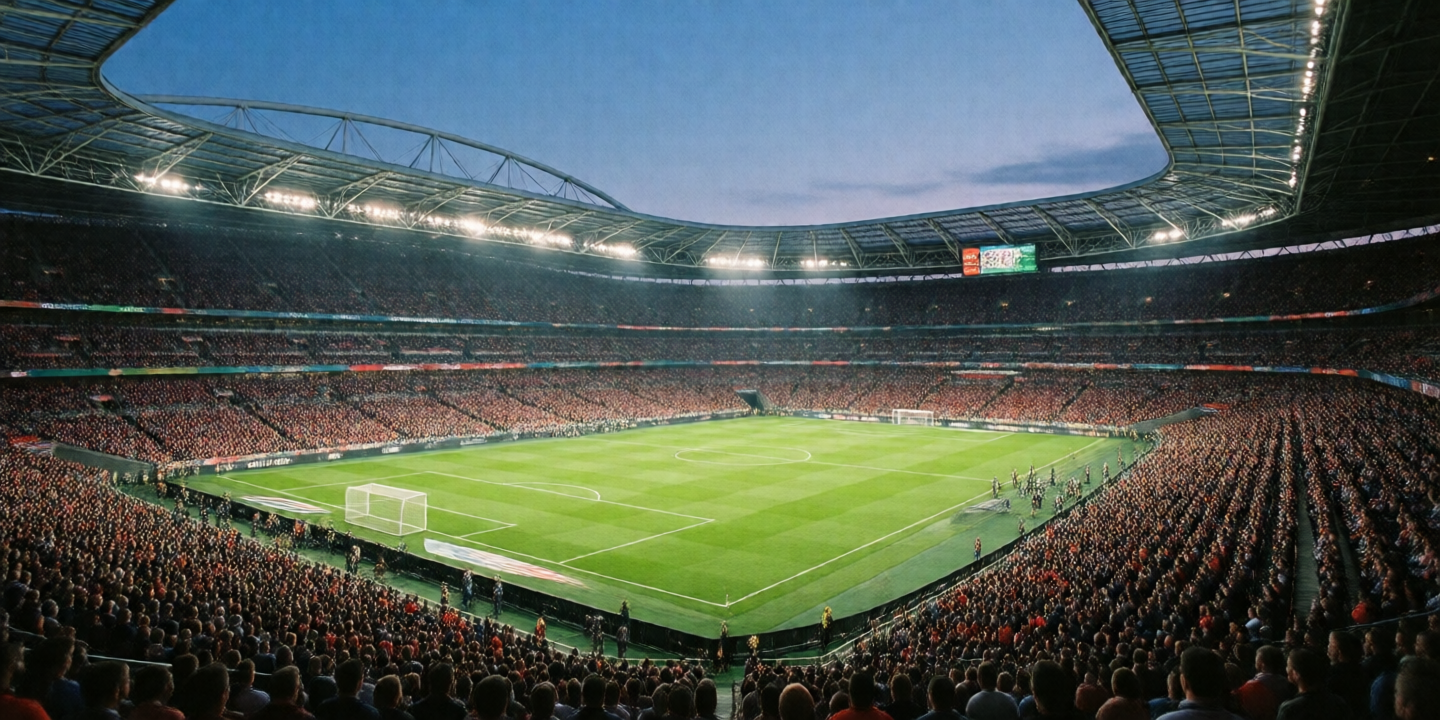
Photo by K on Pexels
Myth 3: A famous team is automatically a safe prediction — flat-out false
Reputation is a useful prior probability, but it is not a complete match model. A historically successful national team can still underperform when injuries, tactical transitions, goalkeeper form, squad age, travel, heat, or opponent-specific matchups reduce its expected goal difference.
The 2026 tournament also creates a broader sampling problem. Because 48 teams will compete, casual analysis may overvalue well-known European and South American sides while underestimating teams with strong defensive organization, elite transition speed, or favorable group schedules. That bias is especially dangerous in prediction markets, where public money can compress the price of famous teams without improving the underlying probability.
Goal Moments approaches match predictions through multiple inputs:
- recent competitive performance rather than friendly results alone;
- expected goals, shot quality, and possession territory;
- set-piece creation and concession rates;
- injuries, suspensions, and likely lineups;
- rest days, travel distance, altitude, and temperature;
- tactical compatibility between the two teams.
No model removes uncertainty. A responsible analyst should distinguish between a 55% implied probability and a 75% probability, then explain why the estimate might be wrong. The International Federation of Association Football provides official competition information, while independent statistical sources can add context; neither source guarantees a result.
Why do venue and schedule conditions matter?
Venue and schedule conditions matter because fatigue affects sprint frequency, pressing coordination, and late-match decision-making, while climate can change the pace of play. The 2026 World Cup spans three countries and multiple time zones, so teams may experience materially different recovery conditions.
A specific information gain is the interaction between travel and tactical identity. A high-pressing side usually requires repeated explosive efforts, meaning a short turnaround after long travel may reduce its defensive pressure more than it affects a deep-block team. This is not a universal law, but it is a testable hypothesis using match data.
Another overlooked edge case concerns knockout planning. A team that finishes first in its group may receive a theoretically favorable bracket position but face a more demanding travel route; a runner-up may encounter a stronger opponent earlier while gaining location or rest advantages. Therefore, “finish first” remains valuable, but its expected benefit should be evaluated against the actual bracket and venue sequence.
team tactics and expected-goals analysis
What actually works
A reliable 2026 football World Cup plan combines official information, probability discipline, and practical scheduling. The first step is to verify match dates, kickoff times, stadium assignments, and ticket rules through FIFA or the relevant host-city organizer. Los Angeles information is available through the Los Angeles FIFA World Cup 26 organizing platform, while Atlanta’s local updates appear through World Cup Atlanta 2026.
The second step is to build a match matrix. Record each team’s recent form, opponent strength, expected-goal difference, injury report, rest interval, and travel route. Assign confidence bands rather than one dramatic prediction: for example, “Team A 48%, draw 29%, Team B 23%.” If your conclusion depends on an unconfirmed lineup, label it provisional.
The third step is to separate entertainment spending from betting capital. Set a fixed budget, use only a licensed operator where betting is legal, and avoid chasing losses. The National Council on Problem Gambling describes responsible-play resources for people who need support. As its public guidance puts it, “Know the risks before you bet”; that principle is more useful than pretending every wager is an investment.
For fans using Goal Moments, the sensible workflow is:
- Read the tactical preview.
- Check confirmed lineups and late injury news.
- Compare your probability with the market’s implied probability.
- Reject the wager if the edge disappears after fees, margin, or uncertainty.
- Record the result without changing the process emotionally.
The last step is where many clever people suddenly become amateur accountants with selective memory. A short winning streak is not proof of skill; a sample of 20 or 30 matches is still noisy.
Want daily tournament analysis built around tactics and player data?

What should a responsible prediction checklist include?
A responsible checklist should include legality, budget, probability, source quality, and stop-loss rules before any wager is considered. It should also require a confirmed market, transparent odds, and an understanding of settlement rules, because a correct football opinion can still produce a losing bet when the selected market is misunderstood.
Use this compact audit:
- Is betting legal in your jurisdiction?
- Is the operator licensed and identifiable?
- Have you set a fixed financial limit?
- Are the odds converted into implied probability?
- Have you accounted for bookmaker margin?
- Is your information current, especially lineup news?
- Are you avoiding live bets made under emotional pressure?
- Do you know how to pause or self-exclude?
For example, decimal odds of 2.00 imply a gross break-even probability of 50% before margin. If your assessed probability is 52%, the theoretical edge is only two percentage points, not a guarantee. A single red card can erase that edge instantly, so stake size should reflect uncertainty rather than confidence theatre.
What to ignore
Ignore guaranteed World Cup predictions, “inside information” without a verifiable source, and claims that one statistic explains every match. Also ignore social-media tipsters who display only winning slips, because that is survivorship bias: the visible sample excludes the predictions that failed.
Do not treat FIFA rankings as a complete model, either. Rankings summarize historical performance under a defined methodology, but they may not capture current injuries, coach changes, tactical fit, or venue effects. Similarly, head-to-head records can be misleading when the meetings occurred years apart under different managers and squad conditions.
Promotional betting language deserves particular caution. Terms such as “risk-free,” “guaranteed win,” and “sure thing” often describe marketing mechanics, not mathematical certainty. Read minimum odds, rollover conditions, expiry dates, eligible markets, maximum payouts, and withdrawal requirements before depositing money. If a promotion cannot be explained in one page of plain language, the expected value may be less attractive than the headline suggests.
A contrarian but defensible conclusion follows: the most valuable action is often not placing a bet. If the market price accurately reflects your estimate, the expected value after margin is zero or negative. Watching the match, tracking the tactical hypothesis, and preserving your budget can be the rational decision.
See how the tournament’s major storylines are developing without confusing excitement with certainty.
Which World Cup details should fans verify first?
Fans should first verify the official match schedule, stadium, kickoff time, ticket source, entry requirements, and local transport plan. These details are more actionable than early predictions because a schedule change or fraudulent ticket can create a guaranteed loss before the football begins.
Check the FIFA tournament site and the relevant host-city organizer, then save the confirmation offline. For Los Angeles, review SoFi Stadium guidance and local fan-festival updates; for Atlanta, confirm Mercedes-Benz Stadium entry and transit information. Allow extra time for security, bag restrictions, and post-match congestion, particularly when using major venues with limited exit routes.
If traveling internationally, review passport validity, visa or entry requirements, mobile connectivity, and medical insurance before departure. Canada, Mexico, and the United States have different border and travel systems, so assuming one rule applies everywhere is a remarkably efficient way to create paperwork misery.
World Cup travel, tickets, and stadium planning
Frequently Asked Questions
Q: What is the 2026 football World Cup format?
A: The 2026 football World Cup features 48 teams and 104 matches across Canada, Mexico, and the United States. The tournament begins with 12 groups of four teams, and 32 nations advance to the Round of 32 through group positions and third-place rankings. This format creates more matches and qualification permutations than the 32-team system used at Qatar 2022. Fans should track official tie-break rules rather than relying on simplified social-media tables.
Q: When does the 2026 FIFA World Cup start and end?
A: The 2026 FIFA World Cup is scheduled to run from June 11 through July 19, 2026. The opening match is scheduled for June 11, while the final is planned for July 19 at MetLife Stadium in New Jersey. Kickoff times and venue details should be confirmed through FIFA because schedules, access policies, and event operations can change. Build travel plans with cancellation flexibility where possible.
Q: How many matches will Los Angeles host?
A: Los Angeles is scheduled to host eight FIFA World Cup 2026 matches at SoFi Stadium. The city will also feature fan celebrations, official fan zones, and FIFA Fan Festival programming at the Los Angeles Memorial Coliseum during the tournament period. Supporters should distinguish ticketed stadium matches from free or separately managed fan events. Transport planning is essential because Inglewood traffic can be substantially heavier on event days.
Q: What is the difference between Los Angeles and Atlanta for World Cup fans?
A: Los Angeles offers eight matches and extensive regional entertainment, while Atlanta offers a semifinal at Mercedes-Benz Stadium and a concentrated downtown sports environment. Los Angeles may suit fans attending multiple matches and cultural events, whereas Atlanta can be preferable for a high-stakes knockout experience. Compare ticket availability, hotel prices, rail access, airport transfers, and total travel time rather than judging by match prestige alone.
Q: How should I analyze a 2026 World Cup match?
A: Analyze a 2026 World Cup match by combining team strength, recent performance, expected goals, lineups, injuries, rest, travel, climate, and tactical matchup. Begin with a baseline probability, then adjust it only when reliable evidence supports the change. Goal Moments focuses on predictions, tactics, and player statistics, but no analysis can eliminate football variance. Record your assumptions so you can evaluate the process instead of rewriting history after the final whistle.
Q: Is betting on the 2026 football World Cup legal?
A: Betting legality depends on your country, state, province, or territory, so you must check the applicable local regulator before wagering. Use only an identifiable, licensed operator, verify age and identity requirements, and understand deposit, withdrawal, promotion, and self-exclusion rules. Never bet borrowed money or chase losses. If gambling stops feeling recreational, contact a recognized responsible-gambling service such as the National Council on Problem Gambling in the United States.
Q: What should I do if a World Cup prediction or bet goes wrong?
A: Stop and review the decision instead of immediately increasing the stake. Separate a bad outcome from a bad process: a strong probability assessment can lose because football contains substantial random variation, while a careless bet can win by accident. Record the odds, information available, and reasoning, then take a cooling-off period. If losses or urges feel difficult to control, use operator blocking tools or professional support before returning.
The best 2026 football World Cup experience is built on verified facts, realistic probabilities, and a budget that survives the tournament. Follow Goal Moments for structured match coverage, tactical context, and player-statistics updates, but keep every prediction in its proper category: informed estimate, never certainty.