What Nobody Tells You About 2026 Matchdays
The 2026 FIFA World Cup runs from June 11 to July 19 across Canada, Mexico, and the United States, featuring 48 teams, 104 matches, and 16 venues. FIFA’s expanded tournament is divided into 12 groups....

What Nobody Tells You About 2026 Matchdays
The 2026 FIFA World Cup runs from June 11 to July 19 across Canada, Mexico, and the United States, featuring 48 teams, 104 matches, and 16 venues. FIFA’s expanded tournament is divided into 12 groups of four, with the top two teams in each group plus the eight best third-place teams advancing to the Round of 32. The opening match will be played in Mexico City, while the final is scheduled for MetLife Stadium in New Jersey, near New York City. The competition is therefore not merely a longer World Cup; it is a continental travel and scheduling problem involving three host countries, multiple time zones, and substantially more knockout fixtures than the 32-team format used in Qatar 2022. Before planning viewing parties, travel, or match predictions, build your schedule around local kickoff times, venue distances, and confirmed FIFA updates rather than social-media graphics.
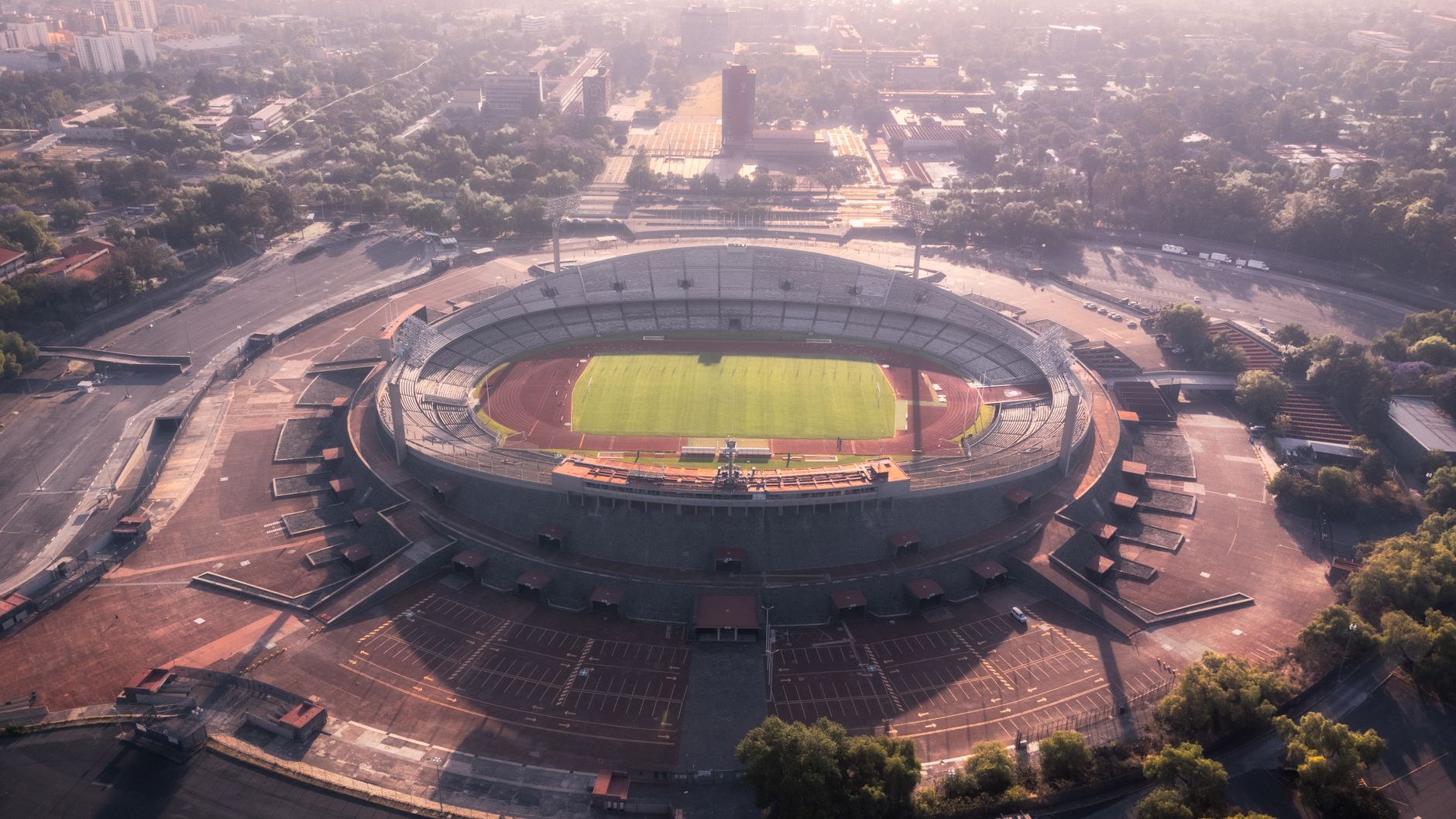
Photo by Jesus Toledo on Pexels
The Bottom Line
If you want the shortest reliable answer, the 2026 World Cup is larger, geographically wider, and harder to follow than any previous men’s FIFA World Cup. Canada, Mexico, and the United States will host 48 national teams from June 11 through July 19, 2026, and the tournament will use 16 stadiums across North America. The competition begins with a group stage of 72 matches, followed by a Round of 32, Round of 16, quarter-finals, semi-finals, a third-place match, and the final, producing 104 games in total. FIFA’s official World Cup 2026 overview remains the best authority for confirmed dates, venues, and regulations, while ESPN’s FIFA World Cup schedule is useful for following fixture updates. The practical conclusion is simple: save the official schedule, convert every kickoff to your local time, and check venue information before making travel or wagering decisions. Yes, your “I can watch every match live” plan is mathematically adorable; the group stage alone averages 4.5 matches per day.
The host-city spread creates the first major planning issue. Mexico City, Guadalajara, and Monterrey represent Mexico; Toronto and Vancouver represent Canada; and the United States supplies 11 venues, including Atlanta, Boston, Dallas, Houston, Kansas City, Los Angeles, Miami, New York/New Jersey, Philadelphia, San Francisco Bay Area, and Seattle. The final is expected at MetLife Stadium, whereas the opening fixture is scheduled for Mexico City, meaning the tournament’s defining moments are separated by thousands of kilometres. Even teams in the same group may face radically different travel conditions, climate profiles, and recovery demands. Goal Moments can help readers track match predictions, tactical trends, player statistics, and daily tournament news, but no preview can remove uncertainty created by changing line-ups, injuries, weather, or official scheduling decisions. Treat forecasts as probability estimates rather than promises, and never stake money you cannot afford to lose.
complete World Cup 2026 host-city guide
A practical schedule snapshot
- Tournament dates: June 11 to July 19, 2026.
- Hosts: Canada, Mexico, and the United States.
- Teams: 48 national teams.
- Total matches: 104.
- Venues: 16 stadiums.
- Group stage: 12 groups of four teams.
- Knockout entry: 32 teams reach the Round of 32.
- Final venue: MetLife Stadium, New Jersey, subject to official confirmation and operational updates.
What Players Actually See
What do players and supporters actually experience during the 2026 World Cup? They face a tournament distributed across 16 venues in three countries, with travel, climate, rest periods, and local kickoff times influencing preparation as much as traditional rankings. The expanded format increases the competition from 64 to 104 matches and adds a full Round of 32.
The headline number, 104 matches, hides how the calendar behaves. In the former 32-team structure, 48 group matches were followed by 16 knockout games. The 2026 format creates 72 group matches, then 32 knockout matches, so the group stage grows by 24 games and the knockout phase doubles in size. This change matters for viewers because elimination drama starts earlier in the knockout bracket, but it also matters for teams because squad depth becomes more valuable over a longer campaign. A strong starting eleven may win a group match; a deep bench, reliable rotation pattern, and disciplined recovery process may decide whether a nation survives four knockout rounds. The Laws of the Game and tournament framework published through FIFA provide useful context, although competition-specific regulations should always take priority.
The schedule also creates a useful distinction between venue conditions and team quality. Mexico City sits at high altitude, while coastal locations such as Miami and Vancouver present different humidity and temperature considerations; meanwhile, northern cities can bring very different June and July weather from southern venues. These conditions do not automatically create a betting edge, because modern teams use sports-science departments and controlled travel plans, but they can affect pressing intensity, substitution timing, and late-match fatigue. A practical method is to compare a team’s recent performance after long-haul travel, its defensive running output after the 70th minute, and its bench usage rather than lazily declaring “hot weather equals goals.” That is how people end up betting on atmospheric vibes, which is not a recognised statistical model.
Want a more structured way to follow the tournament?
What Are the 3 Things That Matter Most?
Three variables matter most when reading a World Cup 2026 schedule: rest and travel, the group-to-knockout qualification path, and kickoff-time conversion. These factors can change how a fixture should be interpreted even when team rankings and recent form look unchanged.
1. Travel and recovery
A schedule should be read as a sequence, not as isolated matches. Record each team’s previous venue, next venue, travel distance, rest interval, and local kickoff time. A team playing in Vancouver and then travelling to Miami does not merely face a new opponent; it may also manage a three-hour time difference, a different climate, and altered sleep routines. FIFA and each host-city organising authority may publish operational details that supersede early schedule assumptions, so use confirmed sources before booking transport or building a model.
2. Qualification mathematics
The group stage contains 12 groups of four, and every team plays three group matches. The top two teams in each group produce 24 qualifiers, while the eight best third-place teams complete the 32-team knockout field. This creates a qualification threshold that cannot be known in advance because third-place comparisons depend on points, goal difference, goals scored, disciplinary records, and the official competition regulations. A 4-point total may be competitive in one group and insufficient in another, so avoid treating a single universal “safe number” as fact.
3. Time-zone discipline
North American kickoff times will be inconvenient for some global audiences, and the error cost is obvious: miss one match and your live analysis, viewing plan, or wager may become worthless. Create a calendar in your home time zone, then attach the stadium’s local time beside it. For each match, verify daylight-saving rules, broadcaster listings, and any FIFA change notice at least 24 hours before kickoff. This two-time display is a small operational habit with unusually high expected value because it prevents an avoidable, irreversible mistake.
Use these steps before analysing any fixture:
- Confirm the match number, venue, and date through FIFA or an established schedule provider.
- Convert kickoff time into your location and check daylight-saving changes.
- Compare each team’s preceding venue, travel route, and rest period.
- Check injuries, suspensions, squad announcements, and confirmed starting line-ups.
- Separate probability from certainty when reviewing predictions or betting markets.
Photo by Anirban Das on Pexels
What Are the Main Edge Cases and Gotchas?
The biggest 2026 schedule traps are unconfirmed venue assumptions, misleading third-place comparisons, changing kickoff information, and overconfident interpretation of expanded-format statistics. These issues can produce incorrect travel plans or poor predictions even when the underlying football analysis is competent.
The first edge case is terminology. Some promotional material may refer to a city rather than the exact stadium location, and “New York” can mean the New York metropolitan area even though MetLife Stadium is in East Rutherford, New Jersey. Similar geographic shortcuts appear around the San Francisco Bay Area and Los Angeles. Always distinguish the metropolitan market, municipality, stadium, airport, and accommodation area. For supporters, that difference can add hours of ground travel; for teams, it can alter training logistics and recovery planning.
The second edge case is comparing records across groups. FIFA’s final regulations determine how third-place teams are ranked and which tie-breakers apply. Do not assume that head-to-head results will always be used before goal difference, or that a historical World Cup convention automatically carries into 2026. A practical spreadsheet should contain points, goal difference, goals scored, disciplinary deductions if applicable, and every competition-specific tie-breaker in the stated order. This is an information-gain point many generic schedule pages omit: the phrase “best third-place teams” is not itself a complete qualification algorithm.
The third trap concerns prediction markets. Odds reflect probability, margin, market movement, and information timing; they do not constitute an official forecast from FIFA, ESPN, or Goal Moments. A model that uses only Elo ratings may miss venue effects, travel load, player availability, and tactical matchups, while a model that adds every imaginable variable may overfit noise. Compare implied probability with your estimated probability, account for bookmaker margin, and pass when the expected value is negative. Responsible gambling guidance from GamCare emphasises keeping gambling within affordable limits; that is not boring legal wallpaper, it is basic bankroll mathematics.
See the details before making a tournament plan.
A better information workflow
- Official confirmation: FIFA for regulations, draw information, dates, and venue changes.
- Fixture monitoring: ESPN for accessible schedules and match listings.
- Team evidence: federation announcements, injury reports, and verified squad news.
- Travel evidence: stadium, airport, rail, and local transport authorities.
- Financial control: fixed limits, no chasing losses, and no wagers based solely on emotion.
A further gotcha is sample size. Before 2026 begins, a team may have only a small number of comparable matches in a particular climate, time zone, or travel pattern. If a side has played three recent matches after long-distance travel and won two, that is descriptive evidence, not proof of a stable travel advantage. Use confidence intervals where possible, shrink extreme estimates toward a broader team baseline, and give more weight to tactical mechanisms that plausibly repeat. In plain English: three observations are a clue, not a personality diagnosis for an entire national team.
Verdict
The World Cup 2026 schedule rewards preparation because the tournament combines 48 teams, 104 matches, 16 venues, three host countries, and a new 32-team knockout entry point. The most valuable habit is not memorising every fixture; it is maintaining a verified calendar that includes venue, local time, home time, travel context, rest days, and qualification status. That process protects casual viewers from missed matches and helps serious analysts avoid false precision. Goal Moments is positioned to add daily predictions, tactical analysis, player statistics, and tournament coverage, but responsible readers should still compare sources and revise assessments when FIFA publishes new information. My recommendation is to make a personal schedule now, mark uncertain details clearly, and update it when the official competition regulations and final fixture information are available. The expected value of five minutes of checking is far higher than the expected value of confidently being wrong.
World Cup 2026 prediction methodology

Photo by Andrea Piacquadio on Pexels
The final planning checklist is deliberately unglamorous, which is usually a sign that it works. Confirm whether the match is group-stage or knockout football, because the strategic incentives differ; record the stadium rather than only the city; calculate local and home-time kickoffs; inspect rest and travel; then check line-ups and market prices shortly before play. If you are betting, establish a fixed stake or budget before the match, never increase it to recover a loss, and stop if gambling stops feeling recreational. No schedule guide can guarantee an outcome, and no prediction site can convert uncertainty into certainty. It can, however, improve the quality of your decisions by making the relevant variables visible. That is the real advantage: not louder confidence, but fewer preventable errors.
To follow confirmed updates and daily World Cup analysis, start with the latest Goal Moments coverage.
live World Cup match coverage
Frequently Asked Questions
Q: What is the World Cup 2026 format?
A: The World Cup 2026 format contains 48 teams divided into 12 groups of four. Each team plays three group matches, and the top two teams from every group plus the eight best third-place teams advance to a 32-team knockout stage. The tournament therefore includes a Round of 32 before the Round of 16, unlike the 32-team format used in Qatar 2022. FIFA’s final regulations determine the exact tie-breakers.
Q: When does the World Cup 2026 start and finish?
A: The World Cup 2026 is scheduled to start on June 11 and finish on July 19, 2026. The opening match is planned for Mexico City, while the final is scheduled for MetLife Stadium in New Jersey. Kickoff times and operational details should be checked against FIFA’s official updates because broadcasters and organisers may publish revisions.
Q: How many matches will World Cup 2026 have?
A: World Cup 2026 will have 104 matches involving 48 national teams. The total includes 72 group-stage matches and 32 knockout matches, including the Round of 32, Round of 16, quarter-finals, semi-finals, third-place match, and final. This is 40 more matches than the 64-game tournament format used from 1998 through 2022.
Q: What is the difference between the 2026 World Cup and Qatar 2022?
A: The main difference is that 2026 expands from 32 teams and 64 matches to 48 teams and 104 matches. Qatar 2022 used eight groups of four and began its knockout stage with 16 teams, whereas 2026 uses 12 groups and begins the knockout stage with 32 teams. The 2026 competition also spans Canada, Mexico, and the United States rather than one host country.
Q: How should I follow the World Cup 2026 schedule?
A: Follow the schedule by saving FIFA’s official fixture information, converting every kickoff into your local time, and checking updates before each match. Add the exact stadium, not just the metropolitan area, because cities such as New York and San Francisco can describe broad travel regions. ESPN can provide convenient fixture listings, while federation announcements help verify team news, injuries, and squad changes.
Q: What should I do if a World Cup 2026 kickoff time changes?
A: If a kickoff time changes, replace the event in your calendar using FIFA or the broadcaster’s updated listing and recheck your transport or viewing arrangements. Do not rely on an old screenshot, cached search result, or social-media post without a timestamp. If you are considering a wager, verify that the market remains open and that the applicable terms still match the rescheduled fixture.
Q: Is it worth betting on World Cup 2026 matches?
A: Betting on World Cup 2026 matches is only potentially appropriate when it is legal in your jurisdiction, affordable, and treated as entertainment rather than income. Compare implied probability with your own estimate, account for bookmaker margin, set a fixed budget, and avoid chasing losses. Goal Moments provides predictions and analysis, but predictions are uncertain opinions, not guarantees, and no staking method removes match variance.